Research
Supramolecular Preconcentrators
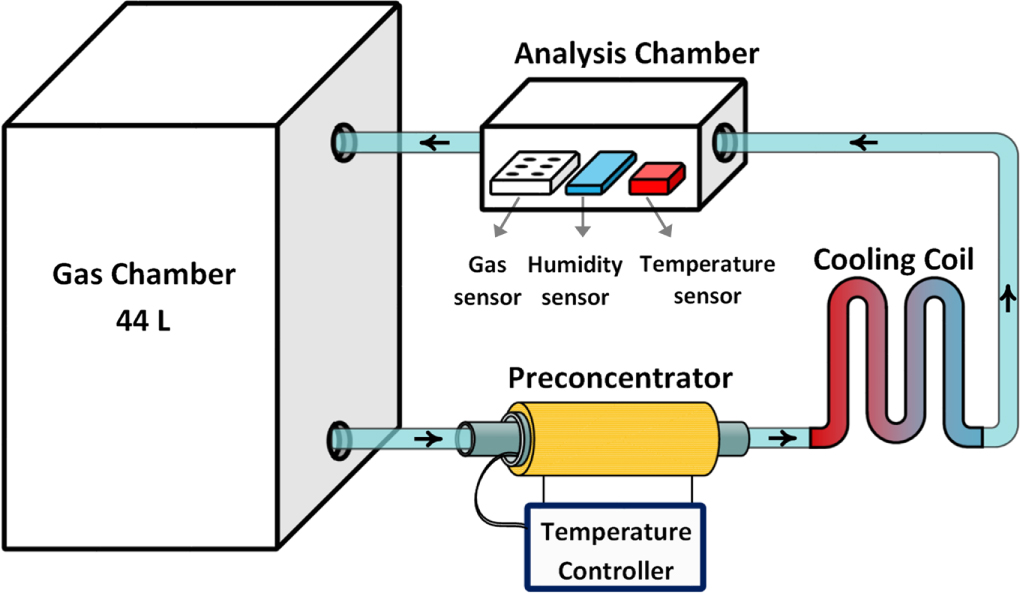
Supramolecular preconcentrators are advanced devices designed to capture, concentrate, and release chemical vapours efficiently. Constructed from self-assembled molecular structures, these preconcentrators provide enhanced control over the collection and release of hazardous substances, particularly low-volatility chemicals. Their unique design allows them to function like sponges, absorbing chemicals from the environment and releasing them in a controlled manner for analysis. This technology aims to improve the portability, safety, and efficiency of chemical detection systems, making it ideal for use in emergency response and field applications where traditional methods may be inadequate. The Loch Group is focused on developing new supramolecular scaffolds for preconcentration applications.
Smart Materials
Smart materials are a class of materials that can dynamically respond to changes in their environment, such as temperature, pressure, moisture, light, or electrical and magnetic fields. These materials have the ability to adapt or alter their properties, such as shape, colour, or mechanical strength, in real time based on external stimuli. Smart materials are used in a wide range of applications, from medical devices and sensors to the development of new energy-efficient technologies. The Loch Group is particularly interested in smart materials designed for optics, such as photochromic markers. In this context, we have developed a multi-stimuli-responsive material that, in both bulk and nanofabricated geometries, responds to light and mechanical stress through a reversible and significant colour change.


Sustainability-focused Research
Sustainable research focuses on reducing the environmental impact of scientific work while continuing to drive innovation and discovery. This involves using fewer resources, reducing waste, and finding greener ways to carry out experiments — from the chemicals used to the energy consumed. By rethinking how research is conducted, scientists can help protect the planet while still making important advances that benefit society. The Loch Group, in collaboration with colleagues from the University of Glasgow, is conducting a comprehensive life cycle assessment (LCA) of flash chromatography purification methods, aiming to identify opportunities to reduce environmental impact without compromising performance.
 Loch Group